前言
相信做过Android开发的同学都知道,主线程中不能做长时间的操作,否则会出现ANR。耗时的操作应该放在其他线程中,操作结束后通过Handler发送一个消息,主线程接收到消息以后进行UI操作。这个过程中牵涉到Android的消息机制,为了更好的学习和理解Android消息机制,这篇文章将从源码的角度进行介绍和分析。
源码分析
Android消息机制主要牵涉以下几个类:Looper、Handler、MessageQueue、Message。在这几个类的协同配合下,构建出了android的消息系统。在介绍这几个类之前,还有一个不得不提到的类就是ThreadLocal。关于ThreadLocal的详细介绍请参考彻底理解ThreadLocal。
ThreadLocal
ThreadLocal类适用于在线程生命周期内数据的长期存储。
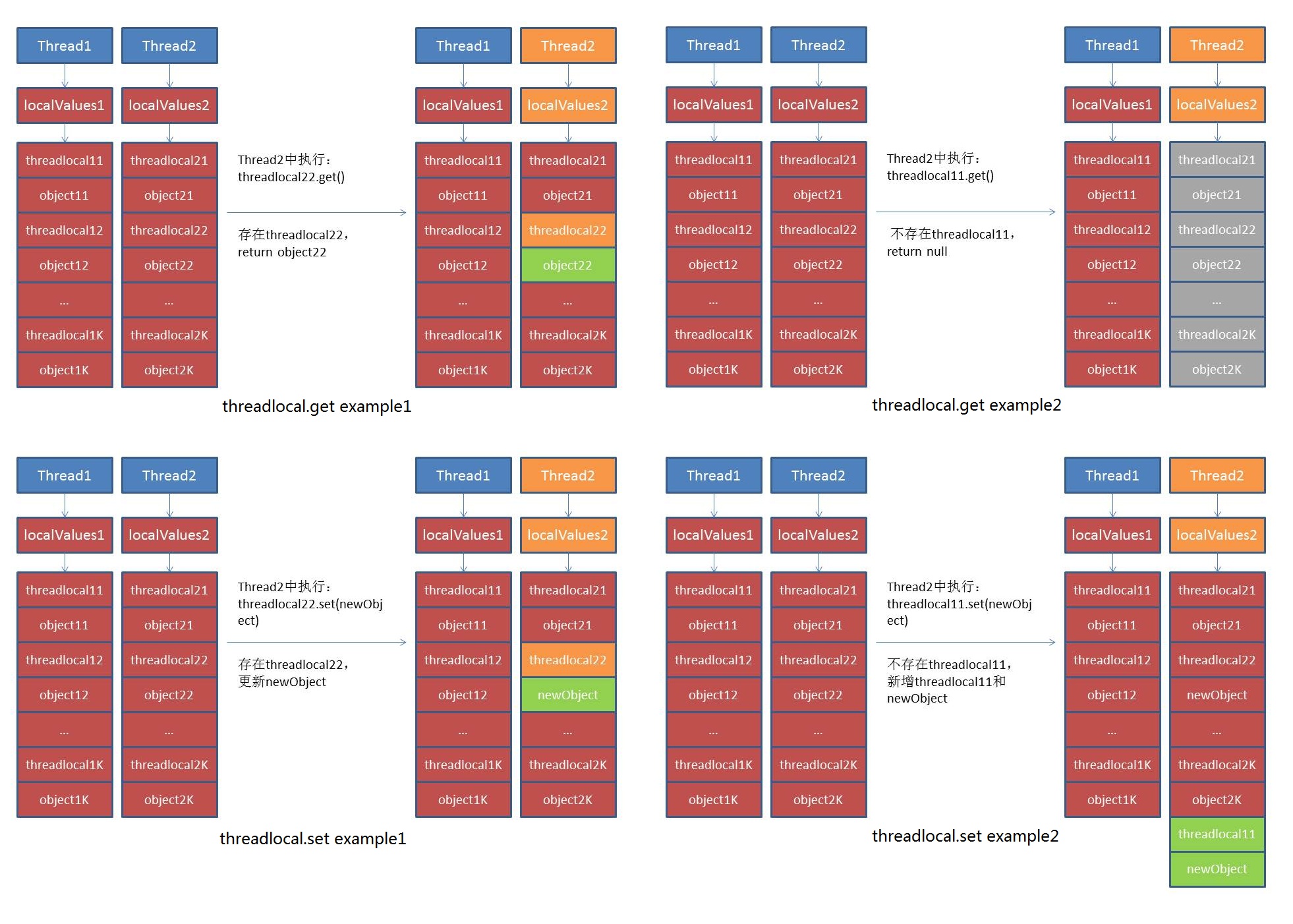
上面的图简单介绍了ThreadLocal的工作原理。每个Thread都有一个Values叫做localValues,localValues是一个存放object的数组,存放规则是threadlocal和具体存储的object成对存放。在ThreadLocal的set和get方法调用时,首先会根据当前所在的线程(如Thread2),找到对应的localValues数组(localValues2)。
- threadlocal.get example1:Thread2对应localValues2,数组中找到调用的threadlocal引用(即threadlocal22),返回object22。
- threadlocal.get example2:Thread2对应localValues2,数组中找不到调用的threadlocal引用(即threadlocal11),返回null。
- threadlocal.set example1:Thread2对应localValues2,数组中找到调用的threadlocal引用(即threadlocal22),更新object22为newObject。
- threadlocal.set example2:Thread2对应localValues2,数组中找不到调用的threadlocal引用(即threadlocal11),在数组末尾新增两个对象,分别是threadlocal11和newObject。
MessageQueue
MessageQueue是管理消息的队列,从数据结构上将它是一个单链表。它有两个最重要的方法:enqueueMessage和next。
enqueueMessage的作用是按照消息处理的时间顺序,将当前需要处理的message插入到链表中的合适位置。enqueueMessage方法的源码如下:1
2
3
4
5
6
7
8
9
10
11
12
13
14
15
16
17
18
19
20
21
22
23
24
25
26
27
28
29
30
31
32
33
34
35
36
37
38
39
40
41
42
43
44
45
46
47
48boolean enqueueMessage(Message msg, long when) {
if (msg.target == null) {
throw new IllegalArgumentException("Message must have a target.");
}
if (msg.isInUse()) {
throw new IllegalStateException(msg + " This message is already in use.");
}
synchronized (this) {
if (mQuitting) {
IllegalStateException e = new IllegalStateException(msg.target + " sending message to a Handler on a dead thread");
Log.w(TAG, e.getMessage(), e);
msg.recycle();
return false;
}
msg.markInUse();
msg.when = when;
Message p = mMessages;
boolean needWake;
if (p == null || when == 0 || when < p.when) {
// New head, wake up the event queue if blocked.
msg.next = p;
mMessages = msg;
needWake = mBlocked;
} else {
// Inserted within the middle of the queue. Usually we don't have to wake
// up the event queue unless there is a barrier at the head of the queue
// and the message is the earliest asynchronous message in the queue.
needWake = mBlocked && p.target == null && msg.isAsynchronous();
Message prev;
for (;;) {
prev = p;
p = p.next;
if (p == null || when < p.when) {
break;
}
if (needWake && p.isAsynchronous()) {
needWake = false;
}
}
msg.next = p; // invariant: p == prev.next
prev.next = msg;
}
...
}
return true;
}
- Line2:msg.target是一个handler对象,会在后面的文章中详细介绍,这里需要知道加入链表的message的handler对象不能为null。
- Line5:msg.isInUse()返回该message是否正在使用中。我们在使用message的时候,尽量采用handler的obtainMessage方法,这样获得的Message会清除掉使用状态,在后面的介绍中会提到。
- Line10:mQuitting是Looper退出的标志位,当looper执行quit方法之后,发送的message对象都不会再加到消息队列当中了。Looper会在后面详细介绍。
- Line17-44:实现了按照处理时间顺序,将message插入适当的位置。
next的作用是根据当前系统时间,在单链表所有满足“消息处理时间早于当前系统时间”的消息中,找到处理时间最早的一条消息,返回该消息,并将该消息从链表中移除。next方法的源码如下:1
2
3
4
5
6
7
8
9
10
11
12
13
14
15
16
17
18
19
20
21
22
23
24
25
26
27
28
29
30
31
32
33
34
35
36
37
38
39
40
41
42
43
44
45
46
47
48Message next() {
...
for (;;) {
...
synchronized (this) {
// Try to retrieve the next message. Return if found.
final long now = SystemClock.uptimeMillis();
Message prevMsg = null;
Message msg = mMessages;
if (msg != null && msg.target == null) {
// Stalled by a barrier. Find the next asynchronous message in the queue.
do {
prevMsg = msg;
msg = msg.next;
} while (msg != null && !msg.isAsynchronous());
}
if (msg != null) {
if (now < msg.when) {
// Next message is not ready. Set a timeout to wake up when it is ready.
nextPollTimeoutMillis = (int) Math.min(msg.when - now, Integer.MAX_VALUE);
} else {
// Got a message.
mBlocked = false;
if (prevMsg != null) {
prevMsg.next = msg.next;
} else {
mMessages = msg.next;
}
msg.next = null;
if (DEBUG) Log.v(TAG, "Returning message: " + msg);
msg.markInUse();
return msg;
}
} else {
// No more messages.
nextPollTimeoutMillis = -1;
}
// Process the quit message now that all pending messages have been handled.
if (mQuitting) {
dispose();
return null;
}
...
}
...
}
}
- Line10-37:实现了查找消息的功能。
- Line40: mQuitting是Looper退出的标志位,当looper执行quit方法之后,该方法直接返回null。
需要注意的是:在enqueueMessage和next方法中都加入了synchronized(this),从而保证了在一个消息队列中,插入和获取消息的线程安全,也就保证了消息队列的准确性。
Looper
Looper从字面上理解,是一个循环器,它的作用是不断的查询并分派对应线程中所有需要处理的消息。
Looper的构造方法为:1
2
3
4private Looper(boolean quitAllowed) {
mQueue = new MessageQueue(quitAllowed);
mThread = Thread.currentThread();
}
在构建looper对象时,就会生成成员变量mQueue和mThread。
Looper有两个重要的成员变量,sThreadLocal和mQueue,类型分别是ThreadLocal和MessageQueue。
sThreadLocal(ThreadLocal类),是用于存储不同进程中对应的Looper对象。根据前面对于ThreadLocal工作原理的介绍,sThreadLocal.get方法返回执行线程存储的object对象,这里就是looper对象,而sThreadLocal.set方法则将一个Looper对象存放到执行线程对应的localValues数组当中。
mQueue(MessageQueue类),是一个消息队列。
Looper还有三个重要的方法:prepare、loop和quit。
prepare方法的作用是生成一个新的Looper对象,并执行threadLocal.set方法保存到线程的localValues数组当中。prepare方法的源码如下:1
2
3
4
5
6private static void prepare(boolean quitAllowed) {
if (sThreadLocal.get() != null) {
throw new RuntimeException("Only one Looper may be created per thread");
}
sThreadLocal.set(new Looper(quitAllowed));
}
- 静态方法,会根据当前执行的线程进行处理。
- 在某个线程中第一次调用Looper.prepare方法,此时在执行线程的localValues数组当中找不到sThreadLocal对象,因此sThreadLocal.get方法会返回null。再调用sThreadLocal.set方法,将sThreadLocal和Looper对象成对保存到线程的localValues数组中。
- 在相一线程中第二次调用Looper.prepare方法,此时在执行线程的localValues数组当中可以找到sThreadLocal对象,因此sThreadLocal.get方法会返回之前保存的looper对象,会抛出异常。
- 结论:
1、一个线程中只能调用一次Looper.prepare方法。
2、由于threadLocal的原理,looper对象保存在执行线程的localValues数组当中,可以认为looper对象是与线程一一对应的。
loop方法的作用是启动循环,查询并分派需要处理的消息。loop方法的源码如下:1
2
3
4
5
6
7
8
9
10
11
12
13
14
15
16
17
18public static void loop() {
final Looper me = myLooper();
if (me == null) {
throw new RuntimeException("No Looper; Looper.prepare() wasn't called on this thread.");
}
final MessageQueue queue = me.mQueue;
...
for (;;) {
Message msg = queue.next(); // might block
if (msg == null) {
// No message indicates that the message queue is quitting.
return;
}
...
msg.target.dispatchMessage(msg);
...
}
}
- 静态方法,会根据当前执行的线程进行处理。
- Line2:调用myLooper方法(即sThreadLocal.get方法),获得当前线程的localValues数组中,sTheadLocal对应的looper对象。这个looper对象与当前线程所对应。
- Line3-5:looper对象为null,抛出异常。异常说明中也详细说明了原因,在调用loop方法前需要先调用prepare方法。
分析:在prepare方法中,会生成一个新的looper对象,并调用sThreadlocal.set方法保存在线程的localValues数组中。只有执行了这个过程之后,sThreadLocal.get方法才能获得到保存的looper对象。 - Line6:获得looper对象的消息队列。由于looper对象本身是与线程一一对应的,因此这个消息队列也是与线程一一对应的。
- Line8-17: 这是一个死循环,不断的查询需要处理的消息。其中:
Line9:调用MessageQueue的next方法,获得需要处理的消息。
Line10-13: 返回的消息为null,从MessageQueue的next方法中我们知道,当调用了Looper的quit方法以后,next才会返回null,表明查询循环已结束。
Line15:msg.target是一个Handler对象,调用其dispatchMessage方法分派处理消息。具体的实现后面会详细分析。
quit方法的作用是结束消息查询循环,不再处理后续的消息。quit方法的源码如下:1
2
3public void quit() {
mQueue.quit(false);
}
- 非静态方法,核心作用是将指定Looper对象下MessageQueue中的mQuitting赋值成true,表示结束循环。之后MessageQueue的next方法均为返回null。
Handler
Handler的构造方法如下:1
2
3
4
5
6
7
8
9
10
11
12
13
14
15
16
17
18
19
20
21
22
23
24
25
26
27
28
29
30
31
32
33
34
35
36
37
38
39
40public Handler() {
this(null, false);
}
public Handler(boolean async) {
this(null, async);
}
public Handler(Callback callback) {
this(callback, false);
}
public Handler(Callback callback, boolean async) {
if (FIND_POTENTIAL_LEAKS) {
final Class<? extends Handler> klass = getClass();
if ((klass.isAnonymousClass() || klass.isMemberClass() || klass.isLocalClass()) &&
(klass.getModifiers() & Modifier.STATIC) == 0) {
Log.w(TAG, "The following Handler class should be static or leaks might occur: " +
klass.getCanonicalName());
}
}
mLooper = Looper.myLooper();
if (mLooper == null) {
throw new RuntimeException(
"Can't create handler inside thread that has not called Looper.prepare()");
}
mQueue = mLooper.mQueue;
mCallback = callback;
mAsynchronous = async;
}
public Handler(Looper looper) {
this(looper, null, false);
}
public Handler(Looper looper, Callback callback) {
this(looper, callback, false);
}
public Handler(Looper looper, Callback callback, boolean async) {
mLooper = looper;
mQueue = looper.mQueue;
mCallback = callback;
mAsynchronous = async;
}
- 前三种构造方法都会进入到第四种构造方法当中(Line11-27):
Line20:调用myLooper方法(即sThreadLocal.get方法),获得当前线程的localValues数组中,sTheadLocal对应的looper对象。这个looper对象与当前线程所对应。
Line21-24:获取的looper对象为null,这里和前面分析的原因一样,必须先执行Looper的prepare方法。
Line25-26:handler对象的MessageQueue即Looper对象的MessageQueue。初始化CallBack,CallBack后面会进行介绍。 - 第五和第六种构造方法都会进入到第七种构造方法当中(Line36-39):
根据指定的Looper和CallBack初始化Handler对象,MessageQueue为指定Looper对象的MessageQueue。
Handler有三个重要的成员变量,mLooper、mQueue和mCallback。
mLooper是构造handler必须的一个成员,我们可以指定传入需要的looper对象,若不指定的话,就根据执行Handler构造方法时所处的线程,来构建线程对应的Looper对象(Looper中的sThreadLocal.get方法)。
- 不管是指不指定looper对象,handler都将与某一个looper对象所关联。由于looper对象本身是与线程绑定的,因此handler对象也具有与线程绑定的特性。
mQueue是handler对象中mLooper所拥有的MessageQueue。
mCallback是handler处理消息的回调接口,后面在handler处理消息方法中(dispatchMessage),会详细介绍。
Handler有三个重要的方法:obtainMessage、sendMessage和dispatchMessage。
obtainMessage方法有很多的重载,差别在于Message对象携带的参数不同(这个参数用于Message的标识)。我们只需知道这个方法会返回一个Message对象msg,并且msg.target等于调用该方法的handler对象(在Looper的loop方法中有提到)。
sendMessage的作用是发送消息,并告知MessageQueue插入该消息。方法的源码如下:1
2
3
4
5
6
7
8
9
10
11
12
13
14
15
16
17
18
19
20
21
22
23
24
25
26
27
28public final boolean sendMessage(Message msg)
{
return sendMessageDelayed(msg, 0);
}
public final boolean sendMessageDelayed(Message msg, long delayMillis)
{
if (delayMillis < 0) {
delayMillis = 0;
}
return sendMessageAtTime(msg, SystemClock.uptimeMillis() + delayMillis);
}
public boolean sendMessageAtTime(Message msg, long uptimeMillis) {
MessageQueue queue = mQueue;
if (queue == null) {
RuntimeException e = new RuntimeException(
this + " sendMessageAtTime() called with no mQueue");
Log.w("Looper", e.getMessage(), e);
return false;
}
return enqueueMessage(queue, msg, uptimeMillis);
}
private boolean enqueueMessage(MessageQueue queue, Message msg, long uptimeMillis) {
msg.target = this;
if (mAsynchronous) {
msg.setAsynchronous(true);
}
return queue.enqueueMessage(msg, uptimeMillis);
}
- 最终方法都会进入到enqueueMessage方法。该方法有三个参数,第一个参数是需要插入的MessageQueue消息队列,第二个参数是需要插入的Message消息,第三个参数是消息处理的系统时间。
- 正常调用sendMessage方法时:
Line13会将handler对象的mQueue作为需要插入的MessageQueue
Line23会将msg.target赋值成当前的handler对象。
dispatchMessage方法的作用是分派和处理消息。这一步是整个Android消息机制的最后一步。dispatchMessage方法的源码如下:1
2
3
4
5
6
7
8
9
10
11
12
13
14
15
16
17public void dispatchMessage(Message msg) {
if (msg.callback != null) {
handleCallback(msg);
} else {
if (mCallback != null) {
if (mCallback.handleMessage(msg)) {
return;
}
}
handleMessage(msg);
}
}
private static void handleCallback(Message message) {
message.callback.run();
}
public void handleMessage(Message msg) {
}
- Line2:msg.callback是一个Runnable对象,如果不为空,优先执行msg.callback.run。如new Handler().post一个Runnable对象r,会构建一个Message对象,r作为Message对象的callback。
- Line5-9:mCallback是Handler的成员变量。
- Line10:调用Handler的handlerMessage方法(参见Line16-17)。默认的方法是空方法,可以继承或者派生Handler的子类,覆写该方法来处理消息。
主线程的消息机制
我们知道Java程序的入口是main方法,Android的启动入口为ActivityThread类的main方法。源码如下:1
2
3
4
5
6
7public static void main(String[] args) {
...
Looper.prepareMainLooper();
...
Looper.loop();
...
}
- 调用了Looper的prepareMainLooper方法,这个方法其实就是在主线程中调用了Looper.prepare方法,为后续主线程中处理消息做了准备。
- 调用了Looper.loop方法,我们就可以在主线程中发送和处理消息了。
结论
通过前面的源码分析,我们可以得到以下结论:
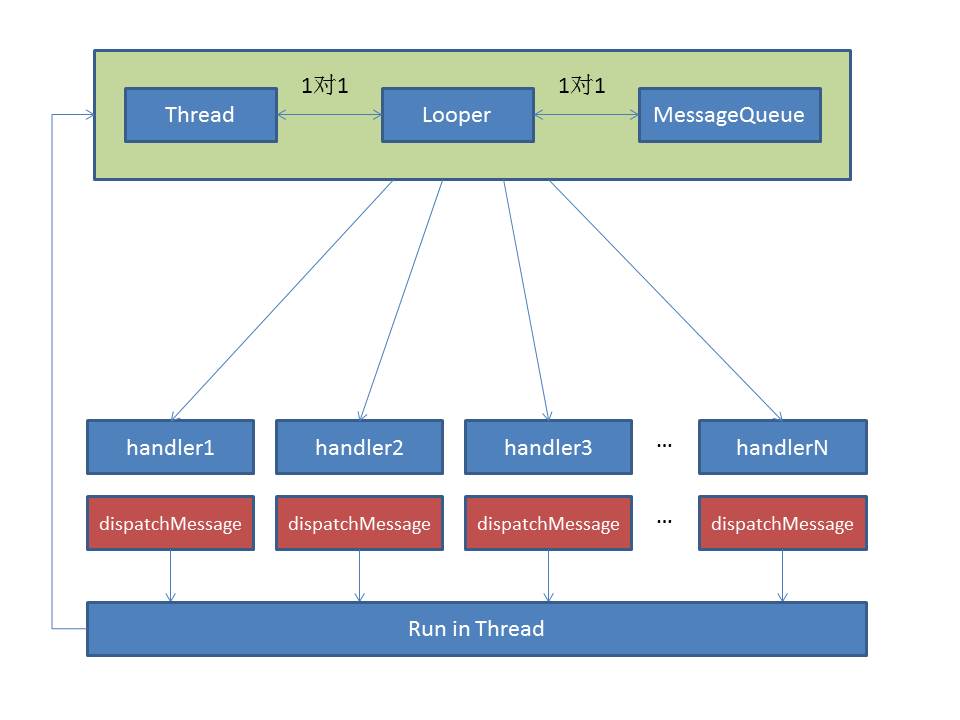
- Looper对象是与线程一一对应的,且一个线程只能有一个Looper对象。
- Looper对象拥有一个MessageQueue。
- 可以认为Thread、Looper和MessageQueue是捆绑构建Handler对象的。
对于某线程threadA,有且只有一个looperA,同时对应一个messageQueueA,这些对象都是一一对应的。需要注意的是,looper可以构建出很多的handler对象,如handlerB、handlerC,但这些构建出来的handler对象均是与looper所在线程所对应的,handler的dispatchMessage方法(处理消息的最终方法)也是运行在looper所在线程当中的。 - 传递和处理消息都需要构建handler对象,构建handler对象前需要先调用Looper.prepare方法。注意,一个线程中,Looper.prepare方法只能调用一次。
- 处理消息需要启动Looper循环,即只有在调用了Looper.loop方法后,才启动消息处理机制。
Demo
新建一个Android的程序(这里就不赘述了),在Launcher Activity代码如下:1
2
3
4
5
6
7
8
9
10
11
12
13
14
15
16
17
18
19
20
21
22
23
24
25
26
27
28
29
30
31
32
33
34
35
36
37
38
39
40
41
42
43
44
45
46
47public class MainActivity extends Activity {
private Handler handler1 = new Handler() {
public void handleMessage(Message msg) {
System.out.println("handler1 is in Thread " + Thread.currentThread().getName());
}
};
protected void onCreate(Bundle savedInstanceState) {
super.onCreate(savedInstanceState);
Thread threadA = new Thread() {
private Handler handler2 = new Handler() {
public void handleMessage(Message msg) {
System.out.println("handler2 is in Thread " + Thread.currentThread().getName());
}
};
public void run() {
Looper.prepare();
final Handler handler3 = new Handler() {
public void handleMessage(Message msg) {
System.out.println("handler3 is in Thread " + Thread.currentThread().getName());
}
};
Thread threadB = new Thread() {
public void run() {
Message m3 = handler3.obtainMessage();
handler3.sendMessage(m3);
Message m2 = handler2.obtainMessage();
handler2.sendMessage(m2);
Message m1 = handler1.obtainMessage();
handler1.sendMessage(m1);
}
};
threadB.start();
Looper.loop();
System.out.println("in Thread after loop");
}
};
threadA.start();
}
}
声明Handler对象
声明Handler对象需要Handler对应线程先调用Looper.prepare方法。
handler1显然是在主线程中,主线程在Android启动时就已经调用了prepare方法了。
handler2是threadA的成员变量,因此所在线程为调用new Thread方法时所在的线程,此例中为主线程。已经调用了prepare方法了。
handler3是在threadA的run方法中定义的,因此handler3所在线程应为threadA。因此在handler3生成之前,我们需要在threadA中先调用Looper.prepare方法(Line22)。
发送消息
我们在threadB中同时向handler1、handler2、handler3中发送消息。主线程在Android启动时就已经调用了Looper.loop方法,我们需要处理的是threadA中的Looper.loop方法(Line41)。在threadA中执行了Looper.loop方法以后,就可以给threadA中对应的handler(即handler3)发送消息了。不过执行了loop方法后,threadA就阻塞在loop方法了,即Line42的打印语句不会被执行到。只有在threadA中执行了Looper的quit方法后,Line42的打印语句才会执行。我们可以在Line26之后插入一行代码Looper.myLooper().quit();即可。这行代码本质是调用了sThreadLocal.get方法,获取当前线程对应的Looper对象,并且执行quit结束查询。Looper.loop方法中获得的message返回null,结束循环。因此可以执行后面的语句了。
处理消息
handler1、handler2、handler3都覆写了handleMessage方法,这些方法分别是在主线程、主线程和threadA中执行的。相应的输出语句如下:1
2
303-11 05:13:48.806 18345-18358/com.example.xiajw.mystudy I/System.out﹕ handler3 is in Thread Thread-153
03-11 05:13:48.914 18345-18345/com.example.xiajw.mystudy I/System.out﹕ handler2 is in Thread main
03-11 05:13:48.914 18345-18345/com.example.xiajw.mystudy I/System.out﹕ handler1 is in Thread main